
Table of Contents
Table of Contents
UV Resistant Outdoor Furniture decisions are easier when buyers begin with the operating problem, not a catalog image. For importers, hospitality purchasing teams, furniture retailers, and project specifiers, the practical question is whether furniture exposed to strong daylight can meet the required duty, appearance, care routine, and delivery conditions as one controlled specification. This guide explains how to evaluate UV resistant outdoor furniture without relying on vague labels or unsupported promises.
A useful brief should describe resin, coating, textile, and color-change expectations. It should also state where the furniture will be used, who will handle it, how often it will be cleaned, and what evidence must accompany sample approval. When those inputs are recorded early, UV resistant outdoor furniture becomes a manageable purchasing decision rather than a series of assumptions discovered during production.
What UV Resistant Outdoor Furniture Means in a Real Project
In a commercial order, UV resistant outdoor furniture is not a single feature. It is the combined result of design, materials, dimensions, workmanship, finish, packaging, and maintenance instructions. Two visually similar items may behave differently because their joints, wall sections, contact points, drainage details, or service parts are not the same. The buyer therefore needs a complete definition that a factory, inspector, installer, and facility team can all read in the same way.
The direct answer is to treat UV resistant outdoor furniture as a system. Define the intended location, usage intensity, user range, cleaning method, storage plan, and acceptable variation. Then connect each requirement to evidence: a drawing, material sample, color reference, approved unit, test report where relevant, or inspection record. This approach supports consistent decisions and gives the team a useful baseline if something changes.
Start With Use Conditions, Not a Product Photo
The best UV resistant outdoor furniture choice depends on exposure and operation. Record whether the location is indoor, sheltered, or fully exposed; whether surfaces face rain, salt, pool chemicals, grease, or strong sunlight; and whether staff will move items daily. Also note floor type, door and lift constraints, storage space, and the skill level of the maintenance team. These conditions often matter more than a marketing category.
- Placement: identify sun, rain, humidity, wind, splash, and temperature conditions.
- Duty: estimate turnover, moving frequency, and the likelihood of rough handling.
- Users: review comfort, access, stability, and relevant dimensional needs.
- Operations: document cleaning products, storage, stacking, and seasonal shutdown.
- Service: decide which components should be replaceable and how parts will be identified.
For UV resistant outdoor furniture, these operating notes prevent over-specifying features that add complexity while missing details that affect service life. They also help the supplier explain alternatives in a way that can be compared. If the project serves the public, review applicable local building, fire, accessibility, and product-safety obligations with qualified parties rather than assuming one international reference covers every market.
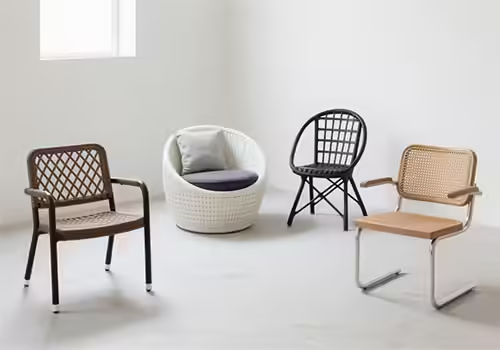
Build a Clear UV Resistant Outdoor Furniture Specification
A workable UV resistant outdoor furniture specification separates mandatory requirements from preferences. Mandatory items are pass-or-fail conditions such as overall dimensions, load-related construction, material identity, finish reference, stability, and packaging method. Preferences can include optional colors or accessory choices. Marking the difference keeps quotation and sample discussions focused.
At minimum, record base material and grade, surface treatment, joint construction, weather exposure, cleaning compatibility, replaceable components. Use units and tolerances rather than words such as “about,” “heavy duty,” or “high quality.” If a requirement cannot be measured, describe the comparison method: for example, a signed physical color sample viewed under agreed lighting, or a complete approved sample retained for workmanship comparison.
| Decision area | What to define | Evidence to retain |
|---|---|---|
| Use and environment | Placement, users, duty level, exposure, cleaning | Project brief and location notes |
| Construction | Dimensions, materials, joints, fasteners, contact points | Controlled drawing and material schedule |
| Appearance | Color, sheen, texture, weave or surface acceptance | Signed sample and dated photographs |
| Quality | Functions, tolerances, defect definitions, sampling | Inspection checklist and report |
| Delivery | Unit protection, carton, labels, load and receiving plan | Approved packing sample and loading record |
The table is a starting framework, not a substitute for the order specification. A UV resistant outdoor furniture file should use the same item code across drawings, samples, packing marks, purchase documents, and inspection records. That simple discipline reduces mix-ups when several models or finish options share a shipment.
Compare Evidence Before Approving a Sample
Evidence should match the claim being evaluated. For outdoor color and polymer exposure, the ISO 4892-2 laboratory light exposure standard describes a laboratory exposure method, but buyers still need to agree on the material, test conditions, duration, and acceptance criteria. For seating strength or stability discussions, references such as ISO 7173 seating test standard and ISO 7174-1 stability test standard can help frame questions; the correct edition and test scope must be confirmed for the product and destination market.
Do not accept a report only because its title sounds relevant to UV resistant outdoor furniture. Check the tested model, materials, laboratory identity, dates, methods, deviations, and result pages. A report for a different construction or finish may offer background but may not demonstrate the ordered item. Keep claims specific, especially environmental claims; the FTC Green Guides summary is a useful reminder that broad claims need clear qualification and support.

Use a Repeatable Selection and Approval Workflow
- Step 1: define the placement and climate. Assign an owner and a due date before moving to the next gate.
- Step 2: turn the use case into measurable requirements. Assign an owner and a due date before moving to the next gate.
- Step 3: review a production-representative sample. Assign an owner and a due date before moving to the next gate.
- Step 4: record approved materials and finishes. Assign an owner and a due date before moving to the next gate.
- Step 5: inspect the shipment against the signed specification. Assign an owner and a due date before moving to the next gate.
A gate is complete only when open questions are closed in writing. During UV resistant outdoor furniture sample review, note every approved point and every required correction. If a change affects dimensions, materials, tooling, color, comfort, stability, packing, or lead time, revise the controlled document and confirm which version governs production. Informal chat messages are useful for speed but should not become the only technical record.
The same workflow should continue after approval. First-production pieces can be compared with the signed sample before the full run advances. Packing can be checked on a real unit, including accessories and hardware. Loading and receiving teams should know the carton orientation and inspection steps. This makes UV resistant outdoor furniture repeatable across departments rather than dependent on one person’s memory.
Inspect Quality Without Creating Ambiguous Rules
Quality control for UV resistant outdoor furniture works best when defect descriptions are observable. “Bad finish” is ambiguous; “visible bare substrate at the front rail under normal viewing” is clearer. Define critical, major, and minor concerns according to the buyer’s risk policy, then state the sampling plan and release authority. The ISO 2859-1 sampling inspection standard provides a recognized statistical sampling framework, but the parties still need to agree on inspection level, acceptance limits, lot definition, and defect classification.
- Vague Material Descriptions can weaken a UV resistant outdoor furniture order unless the requirement and evidence are agreed before release.
- Unapproved Color Variation can weaken a UV resistant outdoor furniture order unless the requirement and evidence are agreed before release.
- Mixed Fastener Specifications can weaken a UV resistant outdoor furniture order unless the requirement and evidence are agreed before release.
- Tests That Do Not Match End Use can weaken a UV resistant outdoor furniture order unless the requirement and evidence are agreed before release.
- Care Instructions Written After Production can weaken a UV resistant outdoor furniture order unless the requirement and evidence are agreed before release.
Inspect appearance in consistent lighting, measure key dimensions with suitable tools, operate moving or folding functions, check stability on an appropriate flat surface, and verify packing against the approved method. Record item codes and quantities examined. For consumer-product awareness, buyers can also monitor the U.S. Consumer Product Safety Commission recall database and the relevant safety authority in their sales market; recall information is a learning source, not proof that a different product is compliant.

Plan Cleaning, Handling, and Replacement
A UV resistant outdoor furniture purchase is incomplete without a care and service plan. The specification should name compatible cleaning methods, drying requirements, inspection frequency, fastener checks, touch-up limits, storage position, and criteria for removing an item from use. Instructions must match the actual material combination; cleaners suitable for one surface can damage another.
Create an asset or batch reference that connects the product to spare glides, feet, connectors, cushions, or hardware. Photograph uncommon assemblies before installation and retain a small controlled parts list. The EPA waste management hierarchy places source reduction and reuse above disposal in its general hierarchy, which supports a practical procurement principle: design maintenance and replaceable parts into UV resistant outdoor furniture decisions when feasible, without making unsupported sustainability claims.
Operators should document recurring wear patterns. If the same joint loosens, finish chips, or carton corner fails across several units, treat it as process feedback rather than isolated maintenance. Clear records allow the next UV resistant outdoor furniture order to improve its construction, protection, or instructions.
Common Buying Mistakes to Avoid
The most common mistake is selecting UV resistant outdoor furniture by appearance and discussing performance later. Other avoidable errors include copying a residential description into a commercial order, approving a partial sample, leaving color references unnamed, assuming “outdoor” has one universal meaning, and failing to test how staff will move or clean the item.
- Do not use a rendered image as the only color or texture authority for the ordered item.
- Do not allow unrecorded substitutions after the production sample is signed.
- Do not treat a component report as evidence for the complete item unless the scope supports that conclusion.
- Do not postpone packing review; damage prevention is part of product quality.
- Do not omit receiving checks, because documented condition helps teams identify where a problem began.
A Practical Preorder Checklist
Before placing a UV resistant outdoor furniture order, use this short review. It can be expanded into the project checklist and attached to the enquiry or purchase file.
- The use location and duty level are written in plain language.
- Dimensions, tolerances, materials, finish, and construction details are controlled.
- The approved sample represents the intended production materials and workmanship.
- Test or compliance requests name the destination market, product, method, and acceptance need.
- Inspection rules describe defects and sampling before production is complete.
- Packing has been reviewed with one representative unit and all accessories.
- Care instructions, parts, storage, and retirement criteria have assigned owners.
- Commercial documents and delivery responsibilities are consistent with the technical file.
Useful supporting pages include OU-TENGXUAN’s product range, commercial furniture guidance, quality control overview, and manufacturing or customization information. These internal references help a buyer connect the UV resistant outdoor furniture brief with available product and service discussions.

Frequently Asked Questions
What should a UV resistant outdoor furniture enquiry include?
A UV resistant outdoor furniture enquiry should state placement, users, quantity range, target dimensions, materials, finish, duty level, care routine, destination, sample needs, inspection expectations, packing, and requested documents. Clear inputs produce a more useful technical response.
How should buyers approve a UV resistant outdoor furniture sample?
Review the complete UV resistant outdoor furniture sample against a controlled checklist. Measure key dimensions, confirm materials and color references, operate functions, assess comfort and stability, inspect workmanship, review labels, and record every correction before signing.
Which tests apply to UV resistant outdoor furniture?
The answer depends on product type, construction, end use, and destination market. Buyers should identify applicable legal requirements first, then agree on relevant voluntary methods and acceptance criteria with qualified testing or compliance professionals.
How can UV resistant outdoor furniture quality be checked during production?
Compare first-production units with the approved UV resistant outdoor furniture sample and specification, verify high-risk materials and dimensions, inspect workmanship at useful milestones, and close corrective actions before packing. Final random inspection should not be the first quality conversation.
What information helps a supplier quote UV resistant outdoor furniture accurately?
Provide drawings or reference dimensions, placement, material and finish requirements, quantity by item, packaging expectations, destination, timing constraints, sample process, and quality documentation needs. Mark which UV resistant outdoor furniture details are mandatory and which allow alternatives.
Turn the Specification Into an Enquiry
A strong UV resistant outdoor furniture enquiry is specific enough to compare and flexible enough to invite practical manufacturing input. Prepare the use conditions, drawings or dimensions, finish references, quantity by item, destination, quality expectations, and delivery assumptions. Then contact OU-TENGXUAN to discuss suitable options, samples, production details, and packing for your project. You can also review the workshop and services pages before sending the brief.
